
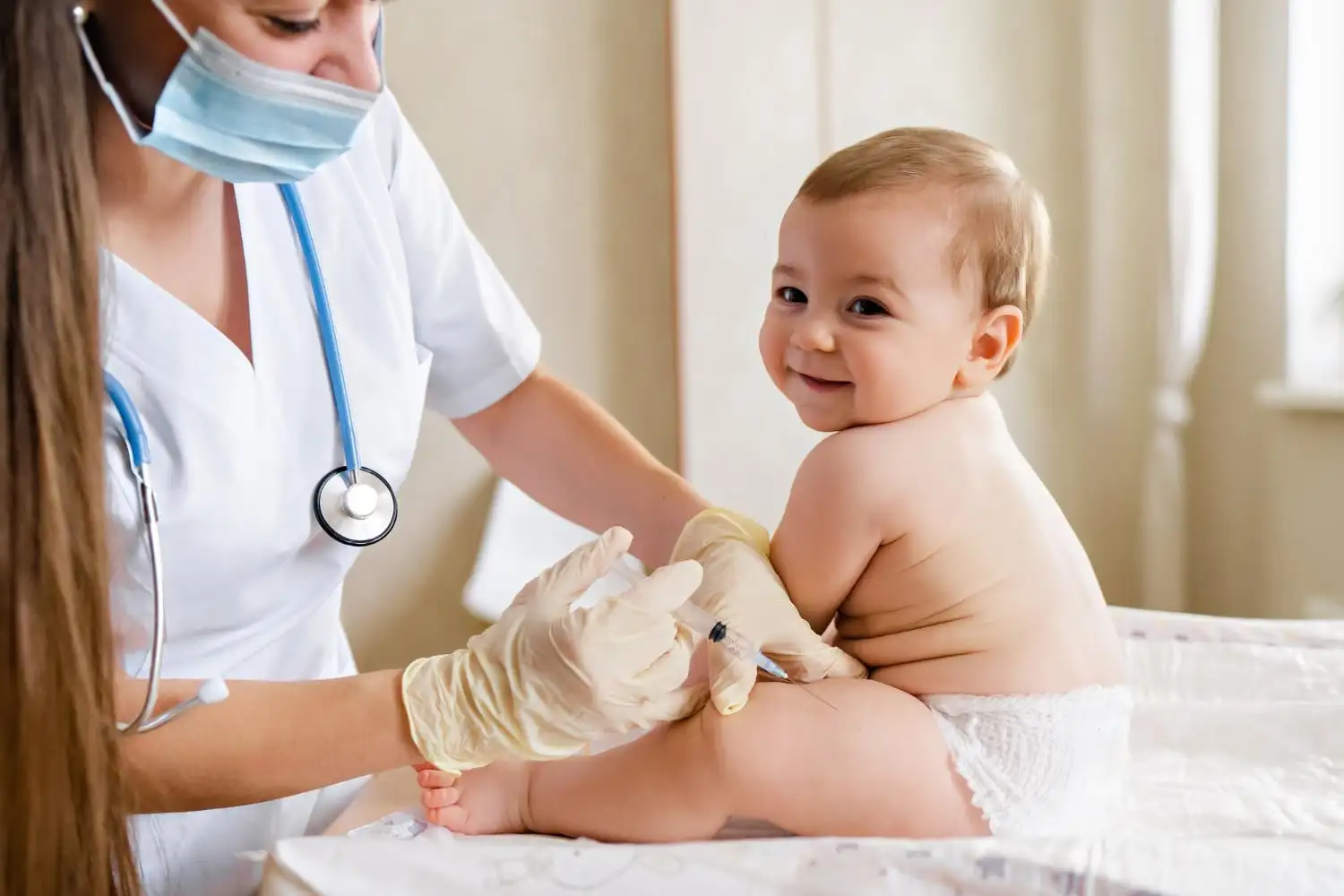
Baby & toddler vaccination · Delhi NCR

Government vs private vaccination: compare the plan, not the price alone

A practical guide for parents in Delhi, Gurgaon, Noida, Ghaziabad, Meerut and Faridabad comparing free government immunisation, private clinics and home vaccination.

Enter birth date · Automatic age-group selection · Review your cart

DelhiGurgaon / GurugramNoidaGhaziabadMeerutFaridabad
Newborn baby vaccination care

What the government programme provides

UIP uses a public-health schedule with vaccines supplied through government facilities. Ask your local centre about session days, the current schedule and the vaccination card. Vaccines provided under the programme are free; a private home visit is a separate paid service.

Why private bills and schedules differ

Private IAP-based care may include vaccines not routinely provided under UIP, as well as different combination formulations or dose timing. Compare the diseases covered, approved age, number of doses, product and visit charges. A combination vaccine may reduce injections, but it does not cover every infection on an age-based chart.

Can you use both government and private services?

Yes, discuss a coordinated plan with your paediatrician. Bring every vaccination record so the clinician can reconcile dates, brands and coverage before adding a dose. Do not restart a course or duplicate doses because the provider changes. Ask which additional protection, if any, is appropriate for your child.

Multidose vials and prefilled syringes: what actually differs

Government programmes often use multidose vials. Private providers may use prefilled syringes, single-dose vials or multidose presentations, depending on the product. A prefilled syringe can reduce preparation steps, but packaging alone does not establish safer care. Every injection needs a new sterile needle and syringe, correct storage and aseptic technique. Opened multidose vaccines must follow the applicable open-vial policy and product discard time. A correctly handled multidose vial is not evidence of poor hygiene.

Conjugate versus plain polysaccharide vaccines

Government UIP already includes conjugate vaccines, including Hib and pneumococcal conjugate vaccine. It is inaccurate to say that government vaccines generally need repeating every two or three years. Some older plain polysaccharide products have different age limits and revaccination guidance, but that depends on the specific vaccine and ongoing risk. Ask for the actual product name and dose schedule rather than choosing by sector.

Which additional protection may need private care?

Influenza, mumps-containing MMR, varicella and meningococcal vaccines are not part of the universal infant UIP schedule. Typhoid vaccine is also not universally included nationally; state, municipal or targeted programmes can differ. Hepatitis A is another private-care discussion. MR supplied under UIP protects against measles and rubella, not mumps. MCV is risk-based, not an automatic essential purchase for every child. Confirm local availability and current clinical guidance before paying.

Download baby vaccination card →

Browse the full pediatric vaccine catalog →

Government and private vaccination schedules: birth to 2 years

Compare the age-based visits through 24 months. Have your paediatrician reconcile doses already received before combining government and private care.

Birth-to-24-month planning overview. Product, previous doses and clinical advice determine the individual plan.
Age / visitGovernment UIPPrivate IAP-based care
BirthBCG, hepatitis B birth dose and OPV-0.BCG, OPV-0 and hepatitis B birth dose; confirm before discharge.
6 weeksPentavalent-1, OPV-1, rotavirus-1, fIPV-1 and PCV-1.DTwP/DTaP-1, IPV-1, Hib-1, hepatitis B-2, rotavirus-1 and PCV-1.
10 weeksPentavalent-2, OPV-2 and rotavirus-2.Second combination-series doses, rotavirus-2 and PCV-2.
14 weeksPentavalent-3, OPV-3, rotavirus-3, fIPV-2 and PCV-2.Third combination-series doses and PCV-3; rotavirus course depends on brand.
6 monthsReview the card and any missed infant doses.Influenza first dose; discuss typhoid conjugate vaccine during 6–9 months.
7 monthsNo separate routine UIP visit solely at this age; check missed doses.Influenza second initial-course dose when indicated, at least four weeks after the first.
9–12 monthsMR-1, PCV booster and fIPV-3; JE-1 in applicable endemic districts. Vitamin A is a supplement.MMR-1 at 9 months; hepatitis A first dose at 12 months.
15 monthsCheck the card; the routine booster window starts at 16 months.MMR-2, varicella-1 and an appropriate PCV booster.
16–18 monthsStart the 16–24 month booster window: DPT booster-1, OPV booster, MR-2 and JE-2 where applicable.DTwP/DTaP, Hib and IPV first boosters.
18–24 monthsComplete any outstanding 16–24 month programme doses. Vitamin A follows its separate schedule.Varicella-2 and, for inactivated hepatitis A products, hepatitis A-2, commonly at 18–19 months.
By 2 yearsReview completion of all eligible UIP doses; arrange catch-up where needed.Review the complete record and annual influenza plan; no blanket extra “2-year package”.
CostUIP vaccines are free at government facilities.Vaccine, consultation and home-visit charges vary.

Hepatitis A course length and rotavirus dose count depend on the product. JE applies to designated endemic areas. Meningococcal and other risk-based vaccines require a separate assessment.

Sources: IAP–ACVIP 2025 timetable, published 2026 · Government UIP schedule.

Read the government vs private vaccination guide →

From availability check to a planned home visit

01 / CHECK

Enter three details

Enter your phone number, PIN and baby’s date of birth. Support receives the enquiry with the age group, suggested vaccines and source page.

02 / REVIEW

Review pediatric booking

The latest age group reached opens with its available routine vaccines selected. Review the default brands, remove doses already given and check the final total.

03 / CONFIRM

Confirm the clinical plan

The team confirms stock and timing. Keep the vaccine record ready and ask about storage, administration, observation and aftercare.

Baby vaccination at home across Delhi NCR

Looking for a child vaccination centre near you? Check whether a home visit is available at your PIN. Locality names below help you identify the requested service area; they do not imply a VacciHub clinic at each location.

Delhi

Request baby vaccination at home in South Delhi, Dwarka, Rohini, Janakpuri, Paschim Vihar and other Delhi localities.

Check PIN availability →

Gurgaon / Gurugram

Check child vaccination home visits around DLF areas, Sohna Road, Golf Course Road and other Gurugram sectors.

Check PIN availability →

Noida

Check newborn and baby vaccination requests across Noida sectors and Noida Extension / Greater Noida West.

Check PIN availability →

Ghaziabad

Request child vaccination in Indirapuram, Vaishali, Vasundhara, Raj Nagar Extension and nearby areas.

Check PIN availability →

Meerut

Check home vaccination requests in Meerut, including Shastri Nagar, Pallavpuram and other localities.

Check PIN availability →

Coverage, visit fees and delivery guidance depend on the PIN record. A successful check is subject to final stock, clinical suitability and appointment confirmation.

Government vs private vaccination: parent questions

Are government vaccines inferior to private vaccines?

Price alone does not establish quality or effectiveness. Government vaccines provide important protection. Compare the actual products, coverage and schedule with the treating clinician.

Is painless vaccination always the better choice?

The term usually refers to an acellular pertussis formulation. It is not a guarantee of no pain or side effects. Ask about the benefits, expected reactions and course for the recommended product.

Is home vaccination free under UIP?

Routine UIP vaccines are free at government facilities. VacciHub home visits use private pricing and a PIN-dependent visit fee. Confirm the itemised total before booking.

How do I prepare for a home vaccination visit?

Keep the vaccination card and prescription ready. Share illness, allergies, previous reactions and medicines. Ask about the vaccine’s storage, expiry, batch record, observation period and emergency arrangements before the visit.

What should I do after vaccination?

Follow the clinician’s observation and aftercare advice. Soreness or fever may occur. Seek urgent medical help for breathing difficulty, facial swelling, collapse or a baby who appears very unwell; do not wait for an online reply.

What happens after I check availability?

The form sends the phone number, PIN, birth date and selected age group to support@vaccihub.in, then opens the child vaccination booking page with that age group in the cart. A PIN not listed online needs manual service confirmation. Review dose history, brand suitability, stock and appointment timing before confirming.

Download baby cardCheck availability

Find home-vaccination locations

All vaccines · Bengaluru, Ahmedabad and Delhi NCR →City sitemaps · Delhi, Gurgaon, Noida, Ghaziabad, Faridabad, Meerut, Bangalore & Ahmedabad →

Copyright © All Rights Reserved VacciHub by PSTRIDE SOLUTIONS LLP